
After the end of WW2, USAmerican and British situation, standup comedy, as well as jokes in real life have come to increasingly, almost exclusively, rely on irony and its more caustic cousin, sarcasm. So much so, that Western populations seem to have almost entirely forgotten that irony/sarcasm is only one of the many mechanisms of humor historically employed in comedy and everyday communication; and even that it’s possible to inspire laughter without it.
Wikipedia defines irony as:
“the juxtaposition of what on the surface appears to be the case and what is actually the case”
The ubiquitous and constant use of this rhetorical device to convey the opposite of reality, is an effect and result of life in contradictory societies where official ideology and lived experience are at odds with each other.
In liberal capitalist countries, the rationale for the bourgeois (ownership based) economic/social order, the reasons given for its material arrangement, the official logic provided for who produces value and who benefits, the justification for governance and policing, is in direct and total contradiction with the lived reality of citizens.
Ideology: “In Liberal Society All Members Are Free Individuals.”
Reality: An extreme and increasing minority owns the vast majority of land, industry, and controls the state, which makes decisions in the interests of this property-owning minority which lives from taking rent and profits from the businesses that they own, while the vast majority are locked in wage-labour.
Ideology: “Work Hard; Get Rich.”
Reality: Everyone, rich or poor, knows that those without profit-generating property can work tirelessly all their lives, and will never be as fractionally rich as the person who owns profit-generating property.
Ideology: “Vote and your voice is heard and will influence policy.”
Reality: Voter turn-out in the USA and every single Western “democracy” has been significantly and consistently dropping for decades. The reason for this can only be huge sections of the population feeling that their vote makes no difference; a feeling confirmed by a recent Princeton University study which found that “The opinions of 90% of Americans have essentially no impact at all.”
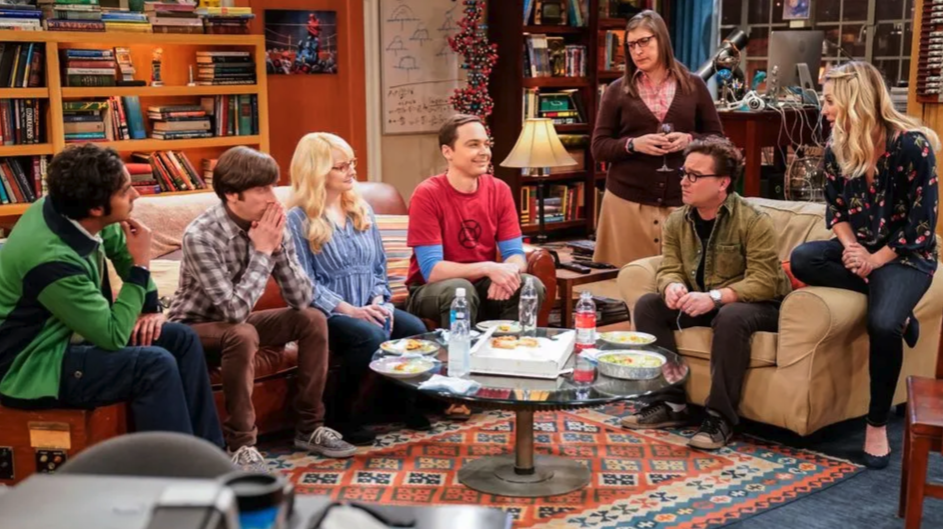
Irony becomes the dominant dynamic of humor in societies where the basic contract between state and citizen is contradictory, where the ideas and ideals people have come to believe, to emotionally invest in, to base life’s meaning on, is contrary to lived experience. Especially so, when these blatant and obvious contradictions are not acknowledged but normalised, and people lack both the conceptual tools to understand, as well as the vocabulary to articulate them.
“Irony is the song of a bird that has come to love its cage”
-David Foster Wallace
The routine adoption of Irony as the default mechanism of amusement is born of the tension between what our minds believe and what our eyes perceive, and the cognative dissonance which results. Irony acknowledges the ambient and unconsciously shared feeling of all citizens of late capitalism: that black is white, up is down, progress is regress, peace is war, freedom is tyranny; that nothing makes sense, and everything is the opposite of what consensus claims it to be.
And this is all in the context of the extreme privilege of the Western countries which benefit from imperialism, as compared to the regions victimised by it. So there is a meta-irony underlying the phenomenon of the proliferation of irony: that people in the rich countries are alienated and miserable, suffering from emotional, social, spiritual poverty.
But irony is sometimes also a feature of the culture of the colonised and enslaved. Since colonisers and slave masters have for centuries described African culture and the rebelliousness of slaves as “bad” and “wicked”, these words were embraced by Afro-Americans and Afro-Caribbeans to mean “good” and “great”, inverting the negative adjectives with positive meaning.
Additionally, it should be noted that humour had also become bitingly sarcastic in the last decades of the Soviet Union. Under the immense pressures of the cold war, encirclement, isolation, ceaseless attacks from much more powerful enemies and other unfavourable objective factors, the state became increasingly bureaucratised, alienated from the people, its propaganda increasingly out of touch and disjointed from reality, and a certain nihilism also set in.
Comrade A: I heard on the radio that comrade Nikolai won a car!
Comrade B: It’s true. I am very happy for him. Only it isn’t a car, but a bicycle. And he didn’t win it; it was stolen from him.
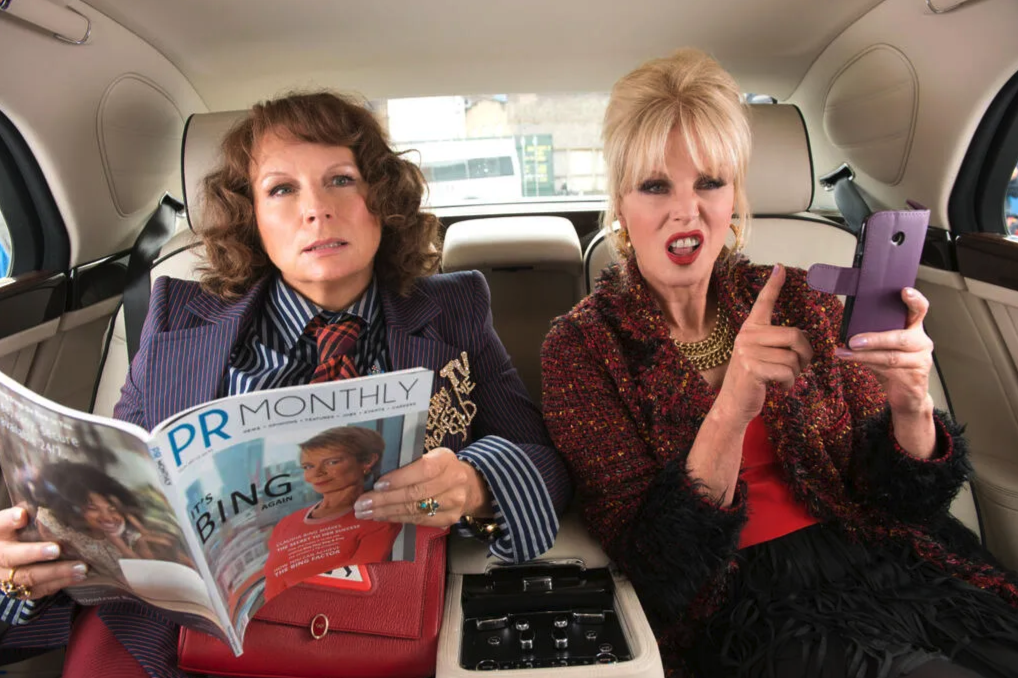
But to a much greater degree, USAmerican and British comedy had come to embrace irony and sarcasm, expressing through it the acute and bitter absurdity of life under capitalism, but without ever identifying the actual contradictions. This tacit acknowledgement of unease, but without pointing to its underlying cause, leads to a second embrace, that of futility, cynicism, bitterness, despair, and nihilism.
Casual references to alcoholism, to exhaustion, to misery, to being “dead inside” (I don’t watch sitcoms much, but can not count the times I have heard this particular phrase used in a casually aloof and acidic way) are constant.
Also, almost always entwined with biting irony and sarcasm is spite: a commonplace callousness, derisiveness, contemptuousness, and mean-spiritedness where derogatory laugher is always at someone else’s expense, fuels much of contemporary Western comedy.
It isn’t exactly hatred, for one does not care enough about the object of one’s spite enough to hate them, but a nonchalant sadism, an offhanded will to insult, ridicule, harm - has become a central fixture of Western entertainment. Spite became so important that a subgenre of comedy dedicated to it was born and gained momentum since the 1980s rise of neo-liberalism: “roasting”, in which the mockery of others becomes a thinly veiled surrogate for the mockery of one self; and the humiliation of others is the last semblance of jouissance for the terminally miserable.

In psychiatry, sarcasm is understood to be a passive aggressive expression of anger, especially used in settings where other expressions of anger is prohibited. When anger, spite, and cruelty becomes pervasive, near totally dominating the humour of an entire culture, it can only be the expression of class discontent which has no other acceptable outlet, from people who have no other way to communicate a sense of having been betrayed, disappointed, deceived. Irony makes explicit, in ways only jokes are allowed to, the deep disappointment, resentment, and melancholy of unfulfilled lives, indirect but acute enunciation of unspeakable inner conflict, turmoil, and sorrow of life within a nonsensical socio-economic order.
So pervasive as to become institutionalised, irony and sarcasm has become a sign of “sophistication” and “intelligence” in diseased societies, where those uninitiated into the ways of contemptuous sneering pessimism are considered naive and stupid.
But in socialist countries where the government had never become alienated from the population, where corruption is managed and suppressed, where the social contract is intact and strong, where there exists a healthy level of trust in the working-class state, just like in indigenous societies to various degrees un-affected by capitalist culture, irony and sarcasm hardly exists.
A comrade coming back from North Korea said: “There is not much irony there”. Instead, “people are just kind of… sincere; smiling and laughing all the time”. When I was a child in China, my family sometimes played a game called “upside down world”, where we would say to each other things that were the opposite of reality — it was a conscious game, and irony was certainly not used under normal circumstances, not woven into the fabric of culture. This is all very similar to what I experienced in many African societies, where people often don’t understand irony, or why anyone would use it. To them it is a form of nonsensical and slightly cruel dishonesty, and they don’t find it funny.
If one thing is certain, the absurd contradictions of capitalism where extreme inequality intensifies by the hour is unsustainable. Radical, structural changes will soon occur in the capitalist sphere, one way or another — after which we can once again laugh without torment or malice; laugh candidly, innocently, wholeheartedly; laugh like Africans or North Koreans.